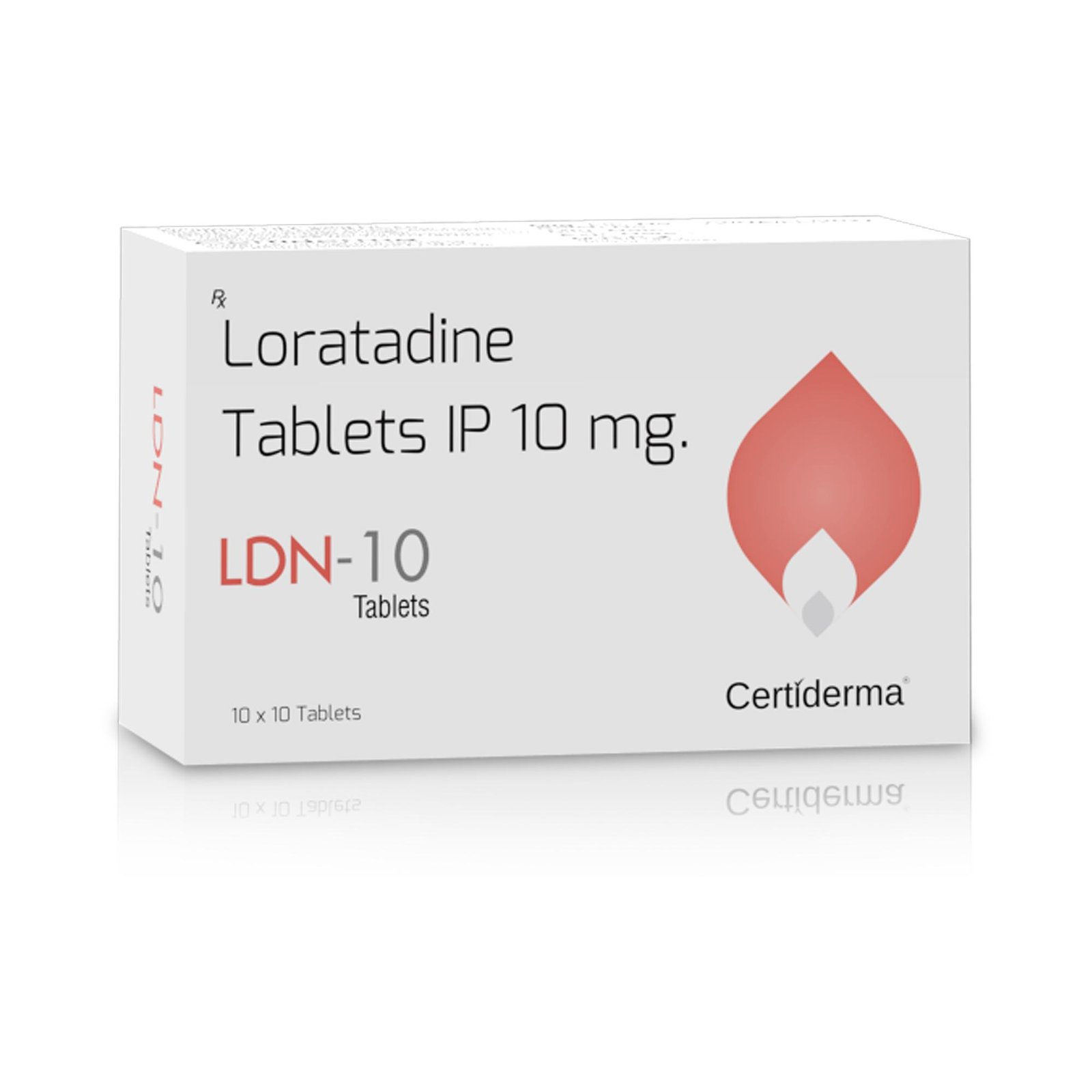
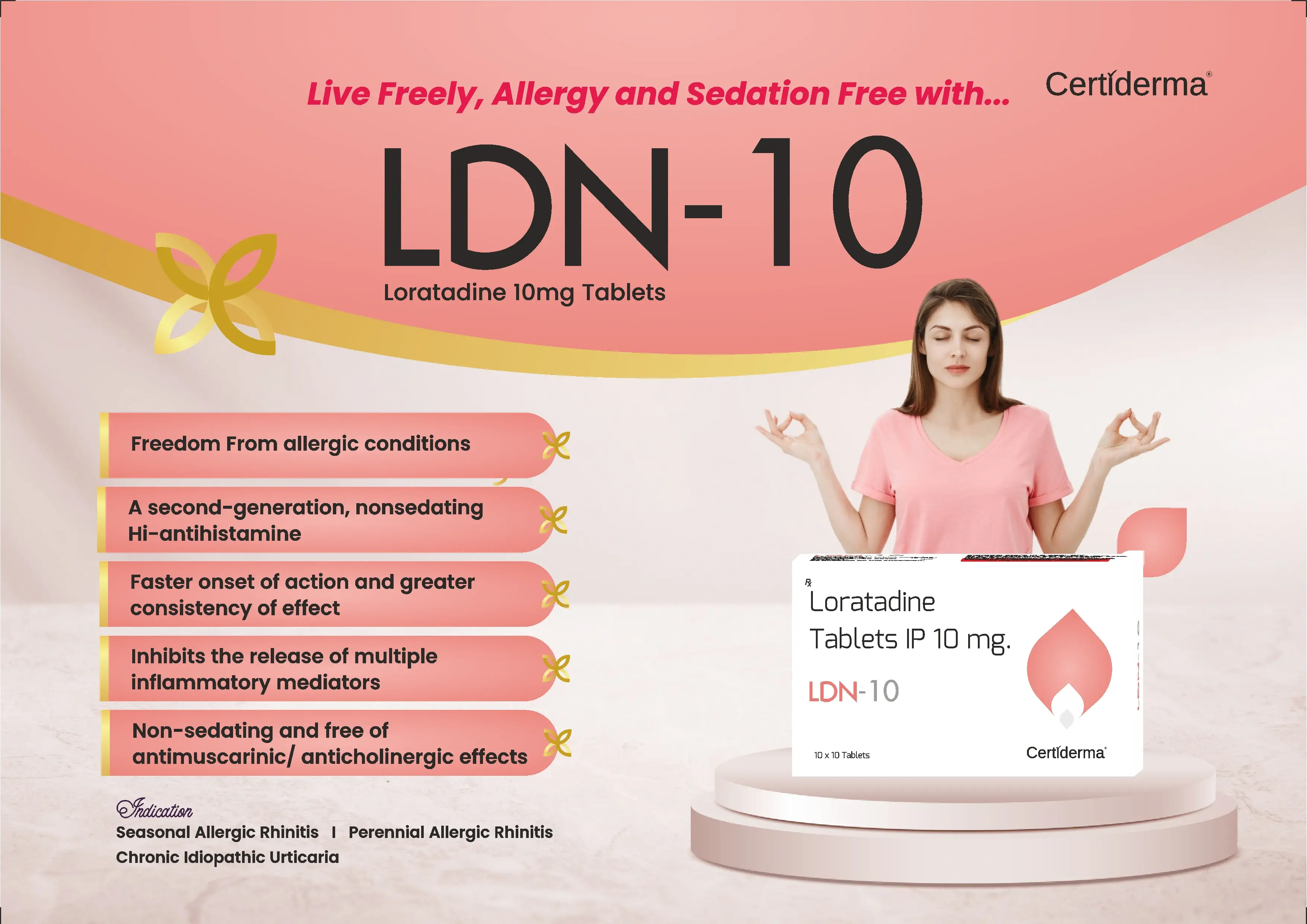
LDN-10 TABLET
LDN 10 Tablet by Certiderma contains Loratadine 10mg, an antihistamine medicine formulated to support the management of allergy related symptoms under medical guidance. This loratadine tablet helps control histamine associated responses and supports relief from symptoms such as itching, sneezing, and allergic discomfort. LDN 10 Tablet is used as directed by a healthcare professional for suitable allergic conditions, including allergic rhinitis and urticaria. Following the recommended dosage and treatment duration supports safe and effective allergy symptom management. As part of the trusted Certiderma pharmaceutical range, it reflects the commitment of a leading derma & cosmetic company and Derma PCD Franchise provider, delivering quality dermatology and healthcare solutions across India.
Additional Info
composition: Loratadine 10mg
pack: 10*10(Brown PVC-Blister)

Loratadine is an antihistamine used primarily to relieve symptoms associated with allergies, such as:
Seasonal Allergic Rhinitis (Hay Fever): Symptoms include sneezing, runny nose, itchy or watery eyes, and itching of the nose or throat.
Chronic Urticaria (Hives): Symptoms include itching and rash.
Other Allergic Conditions: Can be used to relieve allergy symptoms caused by various allergens, including pet dander, dust mites, and mold.
Antihistamine Action:
Blocks Histamine: Loratadine works by blocking the action of histamine, which causes allergic symptoms in the body. Loratadine reduces allergy symptoms like itching, swelling, and rashes by preventing histamine from binding to its receptors.
Non-Drowsy:
Selective Histamine Blocker: Unlike some older antihistamines, loratadine is less likely to cause drowsiness because it selectively blocks peripheral H1 receptors without significantly affecting the central nervous system.
Dosage: The typical dosage for adults and children over 6 years old is one 10 mg tablet once daily.
Administration: As provided by your physician/dermat.
Consultation: Before taking loratadine, consult a healthcare provider if you have liver or kidney disease, as dosage adjustments may be necessary.
Pregnancy and Breastfeeding: Consult a healthcare provider if you are pregnant or breastfeeding to determine if loratadine is safe for you.
Allergic Reactions: Discontinue use and seek medical attention if you experience severe allergic reactions, such as difficulty breathing, swelling of the face, lips, tongue, or throat, or severe rash.