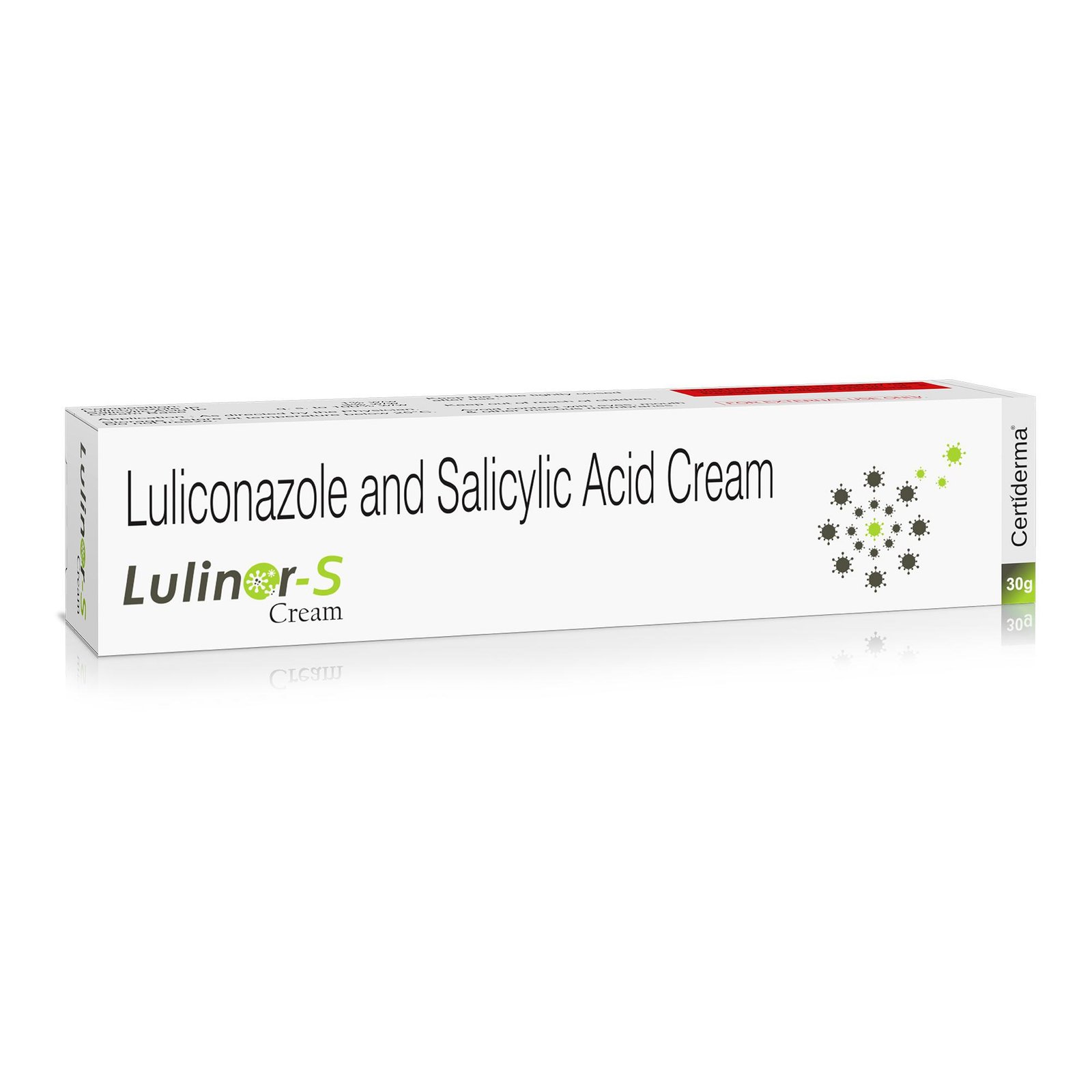
LULINOR-S CREAM
LULINOR S Cream by Certiderma is a dermatology formulated combination antifungal and keratolytic cream containing Luliconazole 1% w/v and Salicylic Acid 3% w/v, designed to support the management of selected superficial fungal skin conditions under dermatological supervision. This Luliconazole Salicylic Acid cream combines antifungal and exfoliating properties to help control fungal growth while supporting the removal of excessive scaling and thickened skin. Suitable for dermatological care of tinea infections, fungal skin conditions with scaling, and superficial fungal infection management, LULINOR S Cream should be used as directed by healthcare professionals for appropriate application and treatment duration. As part of the trusted Certiderma antifungal products range, it reflects the commitment of a leading derma & cosmetic company and Derma PCD Franchise provider, delivering quality dermatology and skin care solutions across India.
Additional Info
composition: Luliconazole 1%w/v & Salicylic acid 3%w/v
pack: 30gm

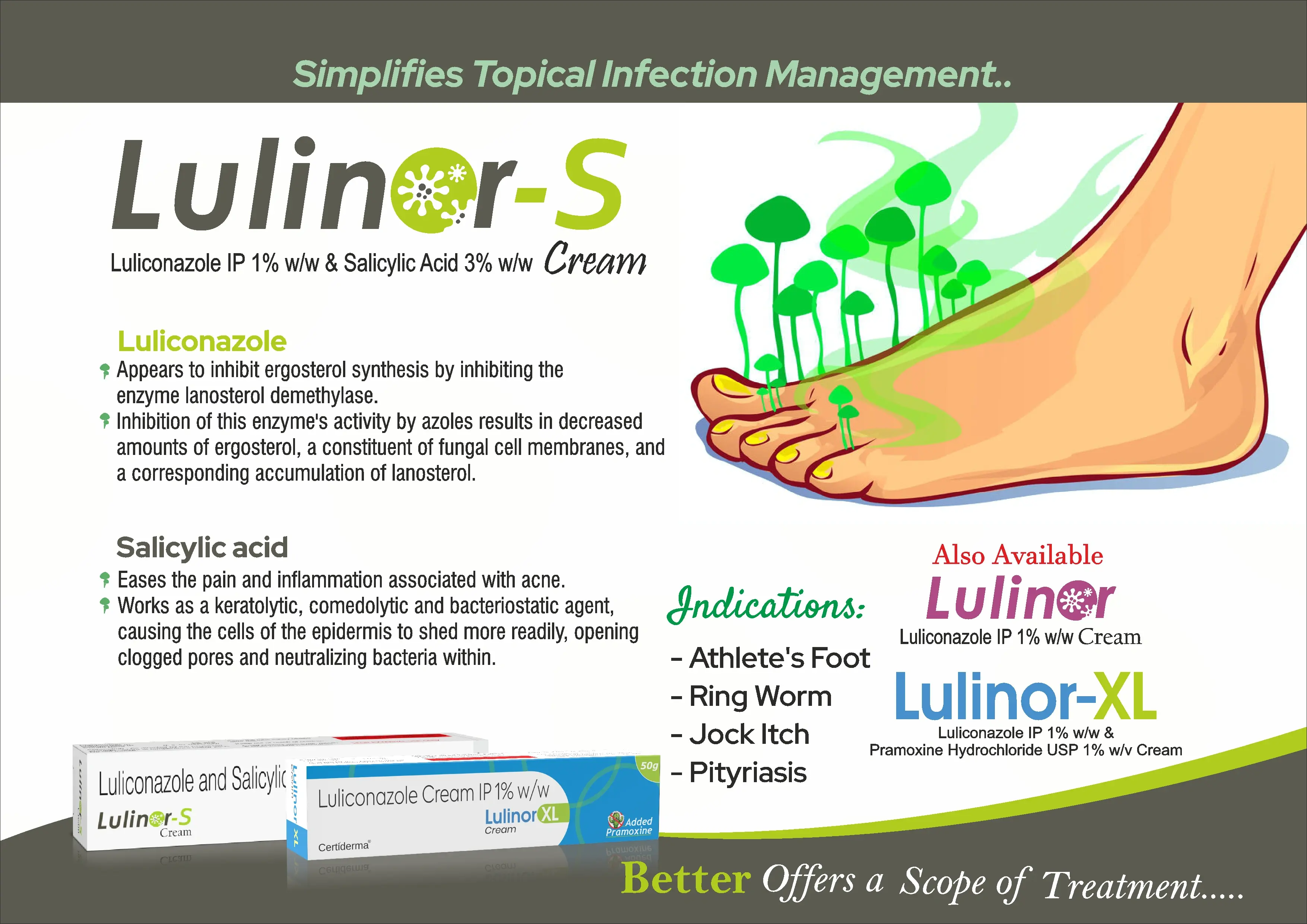
Fungal Infections: Luliconazole is an antifungal agent used to treat superficial fungal infections like athlete's foot (tinea pedis), ringworm (tinea corporis), and jock itch (tinea cruris).
Keratosis & Scaling Disorders: Salicylic acid is a keratolytic agent, helping to soften and shed the outer layer of the skin, making it effective in treating conditions like psoriasis, seborrheic dermatitis, and calluses.
Luliconazole: It inhibits the synthesis of ergosterol, a vital component of fungal cell membranes, leading to the death of the fungal cells and clearing the infection.
Salicylic Acid: By breaking down keratin, it helps in exfoliating the skin, reducing scaling, and promoting the penetration of the antifungal agent into the affected area
Clean and Dry the Area: Wash the affected area with mild soap and water, then pat it dry thoroughly.
Apply the Solution: Gently apply a thin layer of the solution to the affected area once daily, preferably at bedtime, as per your doctor’s instructions.
Massage Gently: Ensure that the solution is spread evenly over the affected skin.
Use Consistently: Continue using the medication for the full prescribed duration, even if symptoms improve earlier, to ensure complete eradication of the infection.
Avoid Contact with Eyes and Mucous Membranes: Keep the solution away from your eyes, mouth, and other sensitive areas.
Skin Sensitivity: Avoid using on broken or irritated skin unless specifically advised by your healthcare provider.
Allergic Reactions: If you experience severe burning, itching, or rash, discontinue use and consult your doctor immediately.
Pregnancy and Breastfeeding: Consult your healthcare provider before using this product if you are pregnant, planning to become pregnant, or breastfeeding.
Sun Sensitivity: Salicylic acid may increase your skin’s sensitivity to sunlight, so it’s advisable to avoid prolonged sun exposure or use sunscreen on treated areas.