How to Treat Vitiligo in India: PUVA Therapy, Repigmentation & Holistic Skin Care | Certiderma

If you have noticed white patches appearing on your skin, you are not alone. Vitiligo affects over 1% of the global population across every skin type, age group, and ethnicity. In India, it is commonly known as leucoderma or safed daag, and carries a disproportionate social and emotional weight. While vitiligo is neither painful nor contagious, it can have a profound effect on confidence, identity, and daily well-being.
The good news is that vitiligo treatment in India has advanced significantly. With early, dermatologist-guided care combining phototherapy, oral psoralen medications, and targeted nutraceutical support meaningful repigmentation is achievable for many patients. At Certiderma, India's leading derma PCD franchise company, we believe effective vitiligo care means treating the whole picture, not just the patches.
This guide walks you through what vitiligo is, why it develops, how the most trusted treatments work, and how Certiderma's comprehensive vitiligo portfolio supports every stage of the journey. You can also explore the complete range at our product portal .
What Is Vitiligo?
Vitiligo is a long-term skin condition characterised by the loss of skin colour in irregular patches. It occurs when melanocytes, the specialised cells responsible for producing melanin, your skin's natural pigments are damaged or destroyed. Without functioning melanocytes, affected areas of skin gradually turn pale or white.
Vitiligo can appear anywhere on the body: the face, hands, elbows, knees, and even inside the mouth. It may be localised (confined to one area) or generalised (widespread), and its rate of progression varies significantly from person to person. It falls within the broader family of autoimmune skin conditions, where the immune system mistakenly attacks the body's own healthy cells.
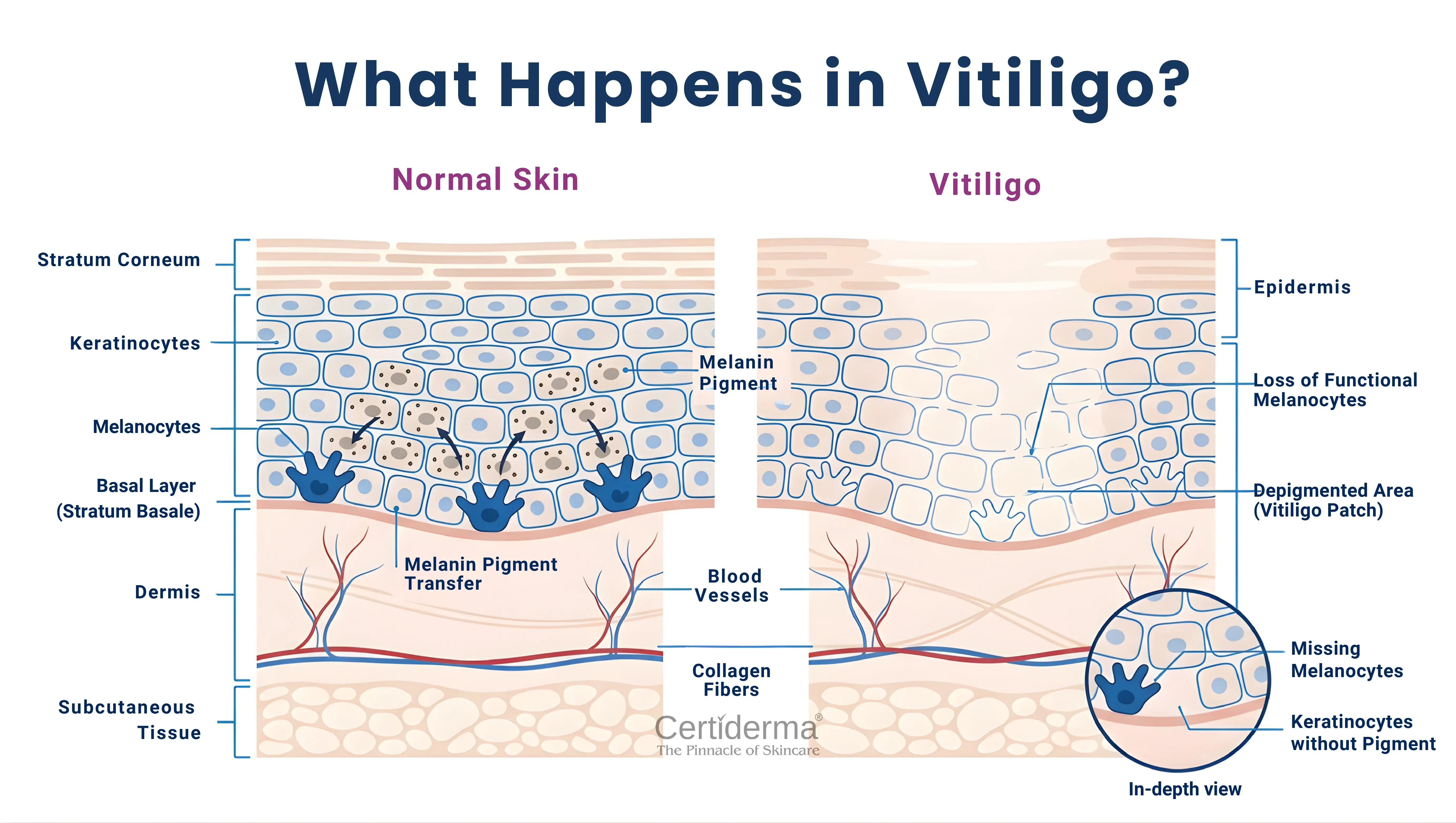
What Causes Vitiligo?
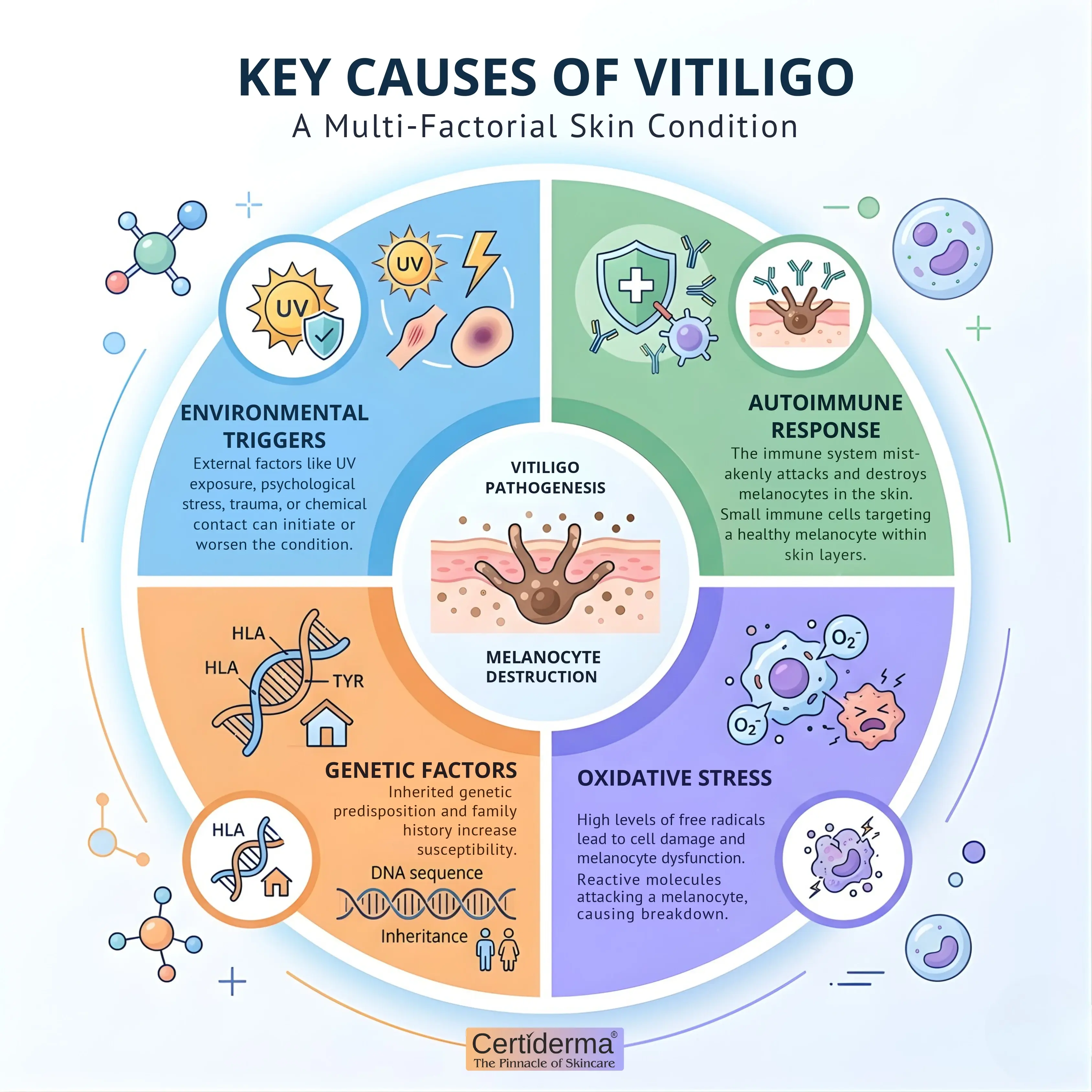
Vitiligo is a multifactorial condition meaning several triggers work together to initiate and sustain it. Understanding these underlying causes is essential, because truly effective vitiligo treatment targets root mechanisms, not just the visible patches on the skin's surface.
Autoimmune response:
- The immune system mistakenly identifies melanocytes as foreign or harmful and attacks them. This autoimmune mechanism is the most widely accepted explanation for vitiligo development and spread.
Oxidative stress:
- An imbalance between free radicals and the skin's antioxidant defences damages melanocytes at a cellular level. High oxidative stress is consistently found in vitiligo-affected skin and is a key target for nutraceutical therapy.
Genetic predisposition:
- A personal or family history of vitiligo or other autoimmune conditions increases risk. The condition is not directly inherited, but genetic susceptibility plays a meaningful role.
Environmental and emotional triggers:
- Sunburn, physical trauma to the skin, prolonged stress, and exposure to certain chemicals can all trigger or accelerate the spread of vitiligo in susceptible individuals.
Why Early Vitiligo Treatment Makes a Measurable Difference
Many people delay seeking care under the assumption that vitiligo cannot be meaningfully managed. In reality, the earlier treatment begins particularly before significant melanocyte loss the better the outcome.
Early, targeted intervention can:
- Slow or halt the spread of depigmented patches
- Stimulate dormant melanocytes to resume pigment production
- Improve the skin's responsiveness to UV-based phototherapy
- Reduce ongoing oxidative damage at the cellular level
- Support long-term skin repair and regeneration
Consistent, dermatologist-supervised care is the single most important factor in achieving lasting repigmentation results. |
Areas where melanocytes are still partially active such as the face and neck typically respond faster than hands, feet, and bony prominences. |
Certiderma's Vitiligo Care Range: A Complete Treatment Portfolio
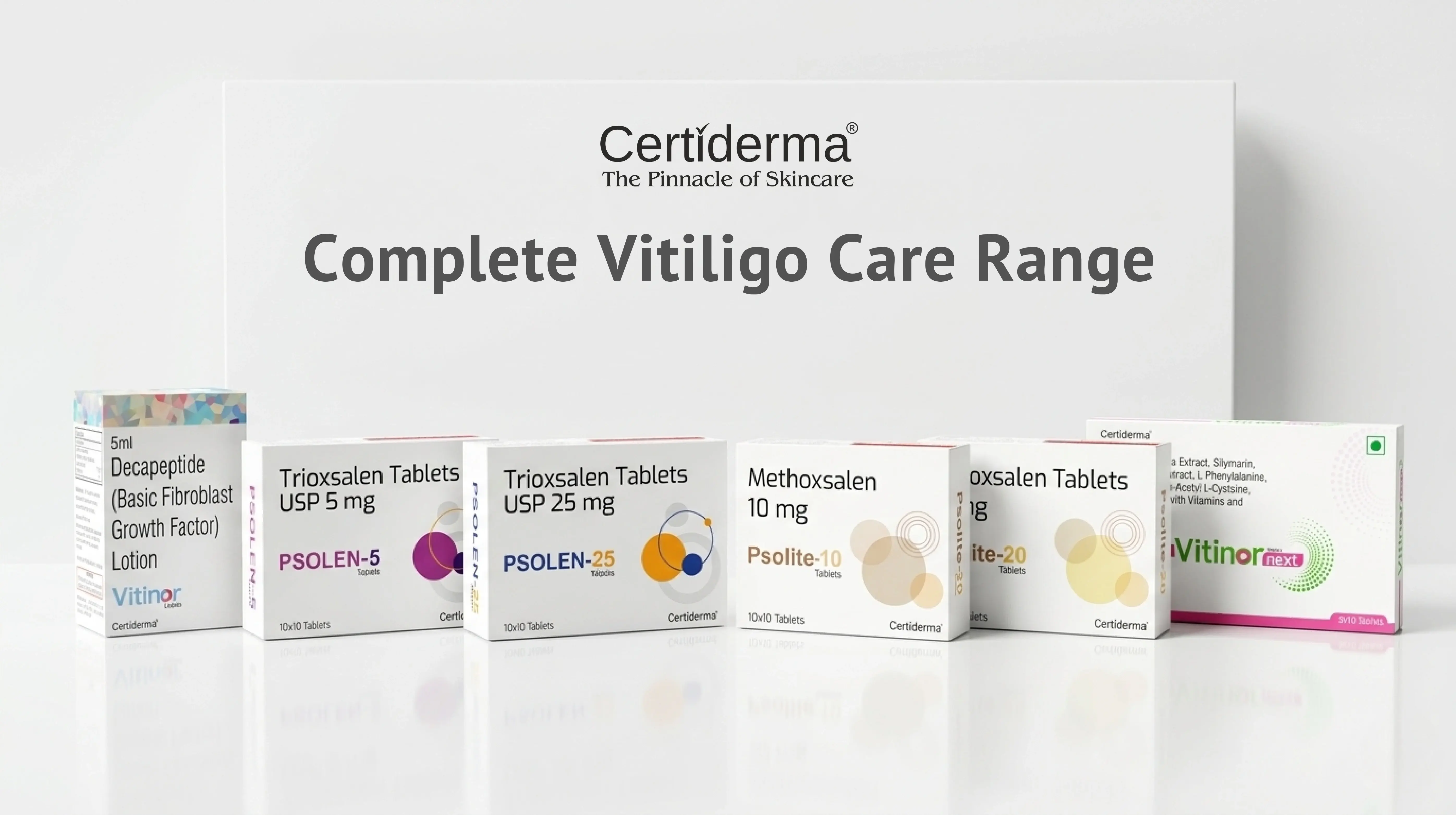
Certiderma has developed a comprehensive portfolio of vitiligo care solutions designed to work across the full treatment spectrum from phototherapy support to daily nutritional care. Each product is formulated with dermatologists in mind, combining clinical relevance with patient-friendly delivery.
The range is built across three pillars:
- Oral photosensitising therapy (PSOLEN and PSOLITE) to prepare the skin for UVA light exposure
- Holistic nutraceutical support (VITINOR NEXT) to address internal root causes of melanocyte damage
- Targeted topical care (VITINOR Lotion) to stimulate repigmentation directly at the patch level
PSOLEN Range - Trioxsalen Therapy for PUVA Treatment
What Is PUVA Therapy?
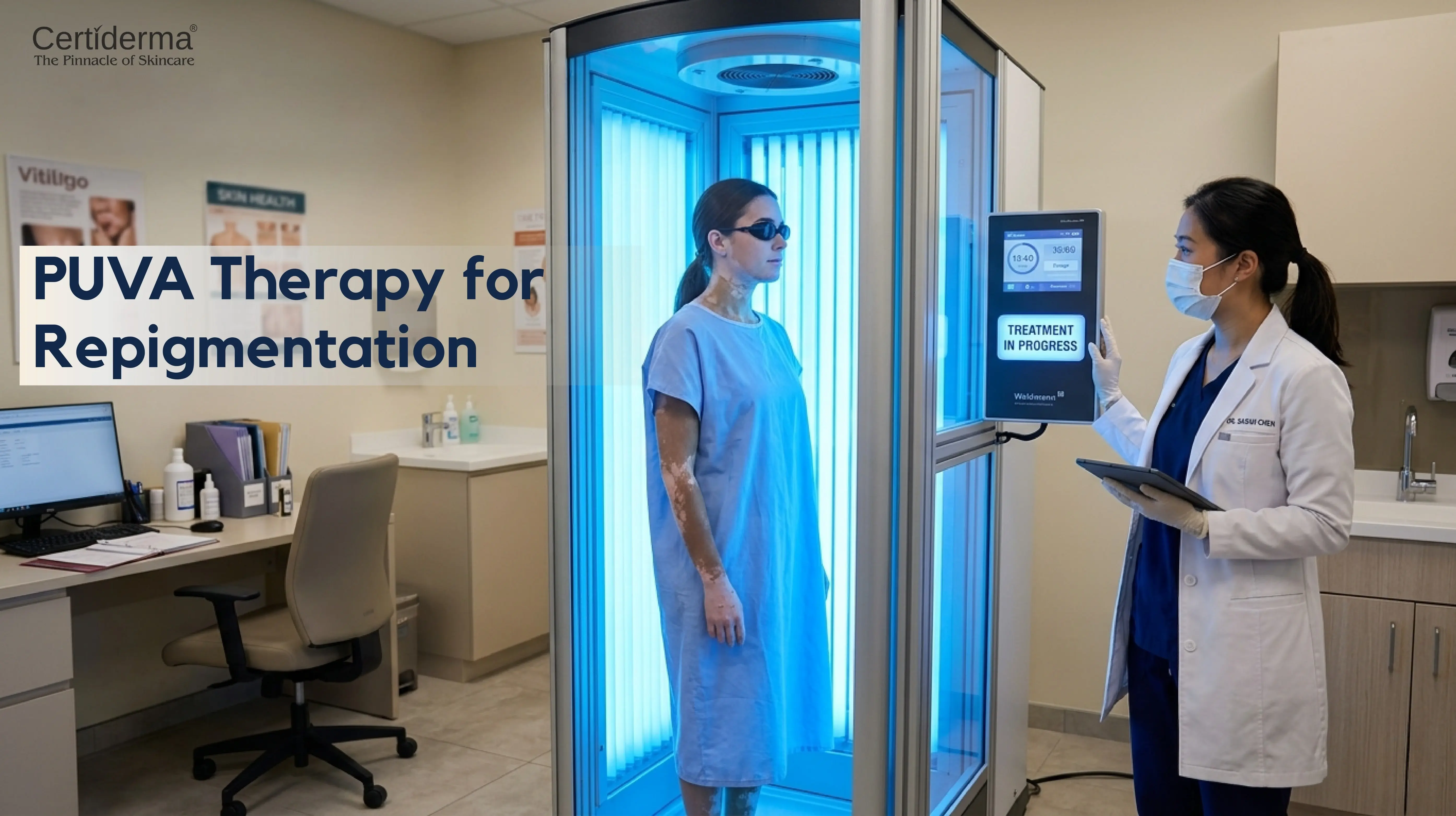
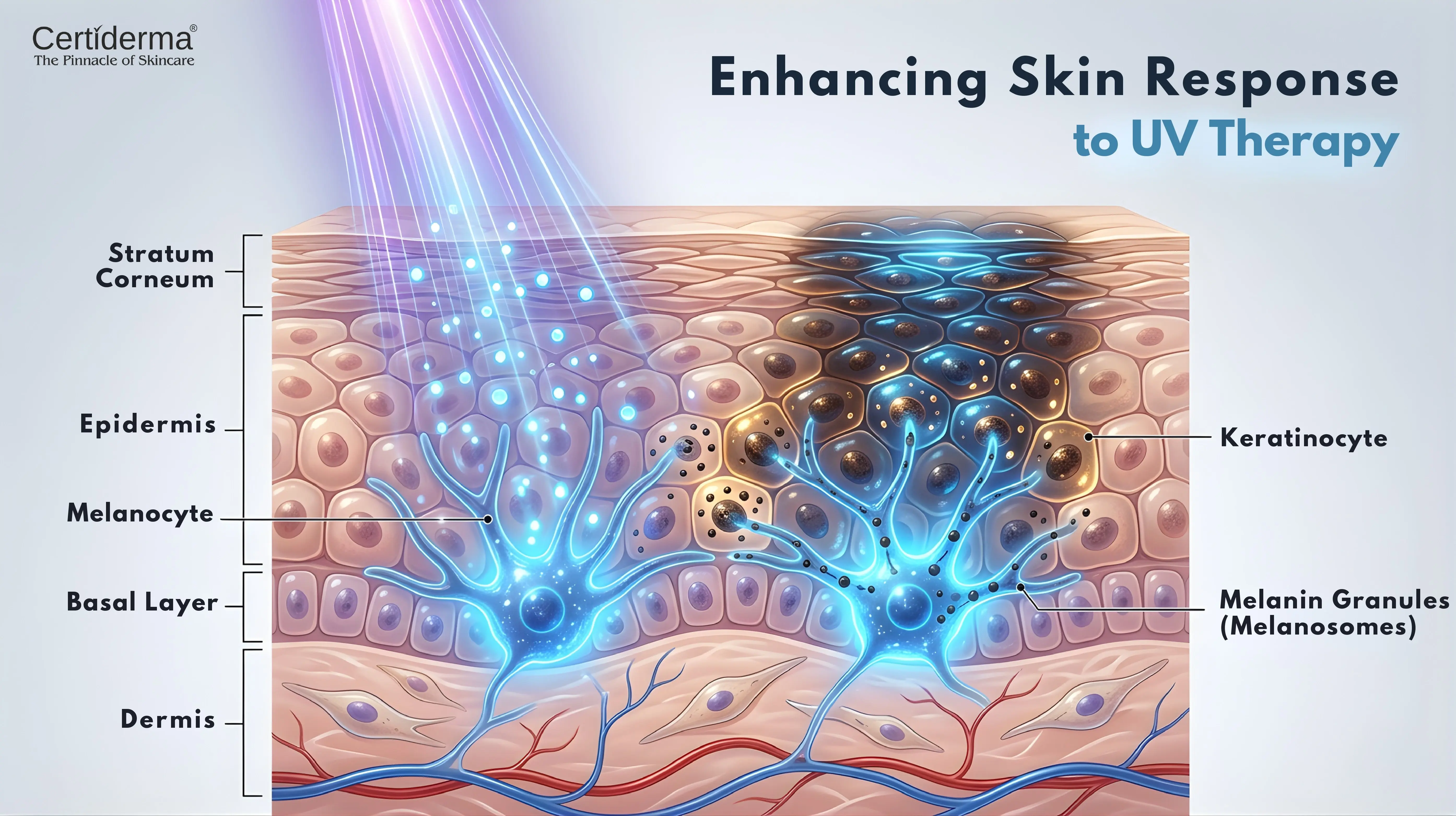
PUVA therapy Psoralen + Ultraviolet A light is one of the most established and clinically validated approaches to vitiligo treatment. It works in two stages: first, a psoralen compound is taken orally to sensitise the skin to UVA light; then controlled UV exposure stimulates dormant melanocytes to resume melanin production.
Certiderma's PSOLEN range uses trioxsalen, a well-tolerated psoralen compound to prepare the skin for phototherapy sessions. It is designed for supervised use under a dermatologist's protocol and comes in two dosage strengths to support both initiation and established therapy.
Key benefits of the PSOLEN range:
- Increases the skin's responsiveness to UVA light
- Supports melanocyte activation and gradual melanin synthesis
- Encourages natural-looking, incremental repigmentation
- Suitable for patients under supervised phototherapy protocols
PSOLEN-5 - Trioxsalen 5 mg
PSOLEN-5 Tablets - Trioxsalen 5 mg | |
Composition | Trioxsalen 5 mg |
Description | A lower-dose formulation designed specifically for the safe initiation of PUVA therapy. PSOLEN-5 allows dermatologists to begin at a conservative dose and titrate gradually, minimising the risk of phototoxic reactions during the critical early treatment phase. |
Best for | First-time PUVA patients; safe dose initiation and titration; sensitive skin |
Product page | |
For patients beginning their phototherapy journey, PSOLEN-5 low-dose trioxsalen tablets offer a safer starting point that allows dermatologists to titrate gradually based on each patient's individual skin response and tolerance.
PSOLEN-25 - Trioxsalen 25 mg
PSOLEN-25 Tablets - Trioxsalen 25 mg | |
Composition | Trioxsalen 25 mg |
Description | A higher-strength formulation for established PUVA therapy regimens. PSOLEN-25 enhances UVA skin sensitivity in patients who have already completed dose initiation and are progressing toward active repigmentation. Trusted by dermatologists for consistent, supervised treatment outcomes. |
Best for | Established PUVA protocols; active repigmentation phase; enhanced UVA sensitisation |
Product page | |
Where stronger sensitisation is needed, PSOLEN-25 Trioxsalen 25 mg tablets deliver the optimised UVA responsiveness required to support meaningful, visible repigmentation progress in established treatment plans.
PSOLITE Range - Methoxsalen Therapy for Phototherapy Optimisation
Why Methoxsalen Is a Cornerstone of Vitiligo Phototherapy
The PSOLITE range uses methoxsalen, one of the most widely used and extensively studied psoralens in clinical dermatology. Methoxsalen has been integral to phototherapy protocols since the 1970s, with a well-established safety and efficacy record in supervised dermatology settings.
It works by enhancing the skin's sensitivity to controlled UV exposure, improving treatment efficacy and supporting more uniform repigmentation across affected areas.
Key benefits of the PSOLITE range:
- Enhances the skin's response to controlled UV therapy sessions
- Supports consistent, uniform pigmentation return
- Well-established tolerability profile in supervised phototherapy
- Improves overall vitiligo treatment outcomes across diverse patient profiles
PSOLITE-10 - Methoxsalen 10 mg
PSOLITE-10 Tablets - Methoxsalen 10 mg | |
Composition | Methoxsalen 10 mg |
Description | A controlled-dose formulation designed for dermatologist-led phototherapy plans. PSOLITE-10 balances treatment effectiveness with patient safety, making it suitable for both the initiation phase and longer-term maintenance protocols. Frequently chosen when dosing precision is a clinical priority. |
Best for | Safety-first phototherapy initiation; long-term maintenance protocols; precision dosing |
Product page | |
Where precision and patient safety are the top priorities, PSOLITE-10 controlled-dose methoxsalen tablets give dermatologists a reliable, flexible foundation for both initiating and maintaining effective, personalised phototherapy plans.
PSOLITE-20 - Methoxsalen 20 mg
PSOLITE-20 Tablets - Methoxsalen 20 mg | |
Composition | Methoxsalen 20 mg |
Description | A potent photochemotherapy formulation for established vitiligo management protocols. PSOLITE-20 is used when stronger UV sensitisation is clinically indicated typically in patients with widespread vitiligo or where lower doses have not achieved the desired therapeutic response. For use exclusively under dermatologist supervision. |
Best for | Established phototherapy regimens; widespread vitiligo; stronger UV sensitisation required |
Product page | |
For patients requiring a more potent approach, PSOLITE-20 methoxsalen 20 mg tablets deliver the clinical-grade UV sensitisation needed for comprehensive, dermatologist-supervised repigmentation management in established protocols.
Trioxsalen vs Methoxsalen: what is the difference? |
Both are psoralen compounds used in PUVA therapy. Trioxsalen (PSOLEN) is generally considered milder and is often preferred for therapy initiation or sensitive skin. Methoxsalen (PSOLITE) is more potent, with a faster-acting and broader photosensitising effect typically used in established or higher-demand protocols. Your dermatologist will advise the most appropriate choice based on your individual condition and treatment history. |
VITINOR Range - Holistic Nutritional & Topical Support
Why Internal Support Is Essential in Vitiligo Management
Phototherapy alone does not address the internal drivers of vitiligo. Oxidative stress, immune dysregulation, and micronutrient deficiencies all contribute significantly to melanocyte damage and ongoing pigment loss. The VITINOR range bridges this gap providing solutions that work from the inside out, as part of Certiderma's broader antioxidant skin care solutions for dermatologists and patients across India.

VITINOR NEXT - Advanced Oral Vitiligo Support
VITINOR NEXT Tablets - Advanced Oral Nutraceutical | |
Composition | Picrorhiza Kurroa 200 mg, Silymarin 250 mg, Ginkgo Biloba 120 mg, L-Phenylalanine 300 mg, Khellin Extract 100 mg, N-Acetyl L-Cysteine 50 mg, Coenzyme Q10 5 mg, Vitamins & Minerals |
Description | A comprehensive nutraceutical formulation targeting multiple root causes of vitiligo simultaneously. VITINOR NEXT combines botanical extracts, amino acids, and potent antioxidants to support immune modulation, reduce oxidative stress, and promote melanin synthesis making it a powerful complement to both phototherapy and topical care. |
Best for | All patients; holistic oral support alongside phototherapy and topical repigmentation therapy |
Product page | |
The role of each ingredient in VITINOR NEXT is clinically purposeful:

Picrorhiza Kurroa (200 mg):
- an adaptogenic herb with strong immune-modulating and antioxidant properties; helps correct the autoimmune imbalance central to vitiligo
Silymarin (250 mg):
- derived from milk thistle; supports liver function and replenishes the skin's cellular antioxidant defences
Ginkgo Biloba (120 mg):
- improves microcirculation to skin tissue and has shown promise in stabilising vitiligo progression in clinical studies
L-Phenylalanine (300 mg):
- an essential amino acid that serves as a direct precursor to melanin, giving the body the raw material it needs to rebuild pigmentation
Khellin Extract (100 mg):
- a plant-based photoreactive compound used synergistically with UV-based therapies to support repigmentation
N-Acetyl L-Cysteine (50 mg):
- replenishes glutathione, the skin's primary antioxidant, directly combating oxidative damage to melanocytes
Coenzyme Q10 (5 mg):
- supports cellular energy production and mitochondrial health, which is essential for melanocyte regeneration and function
Essential Vitamins and Minerals:
- including nutrients critical for immune regulation, skin cell turnover, and antioxidant defence
Together, this makes VITINOR NEXT antioxidant vitiligo support tablets one of the most comprehensive oral support formulations available for patients managing vitiligo alongside phototherapy or topical care.
VITINOR Lotion - Targeted Topical Repigmentation
VITINOR Lotion - Decapeptide Topical Formulation | |
Composition | Decapeptide (Basic Fibroblast Growth Factor) 5 mg |
Description | A targeted topical solution formulated to stimulate melanocyte activity directly at the site of depigmentation. VITINOR Lotion's decapeptide (bFGF) formulation activates growth factor pathways involved in melanocyte proliferation and migration making it a uniquely precise tool for localised vitiligo patch treatment. Applied directly to affected areas, it works synergistically with oral and phototherapy treatments. |
Best for | Localised vitiligo patches; complement to PUVA therapy and oral nutraceuticals |
Product page | |
Applied directly to depigmented patches, VITINOR decapeptide repigmentation lotion delivers targeted growth-factor-driven melanocyte stimulation at the site of pigment loss making it an ideal companion to both oral supplementation and ongoing phototherapy. It is part of Certiderma's full range of therapeutic skin lotions formulated for specific dermatological indications.
Product Comparison: Which Formulation Is Right for You?
The following table provides a quick clinical reference to help dermatologists and patients identify the most appropriate Certiderma product based on treatment stage and clinical objective.
Product | Composition | Treatment role | Best for |
PSOLEN-5 | Trioxsalen 5 mg | PUVA initiation | First-time PUVA; sensitive skin |
PSOLEN-25 | Trioxsalen 25 mg | Established PUVA | Active repigmentation |
PSOLITE-10 | Methoxsalen 10 mg | Controlled phototherapy | Safety-first; maintenance |
PSOLITE-20 | Methoxsalen 20 mg | Potent photochemotherapy | Widespread; established regimens |
VITINOR NEXT | Multi-ingredient nutraceutical | Oral antioxidant support | All patients; alongside phototherapy |
VITINOR Lotion | Decapeptide 5 mg | Topical repigmentation | Localised patches; adjunct to all |
Dermatologist note: |
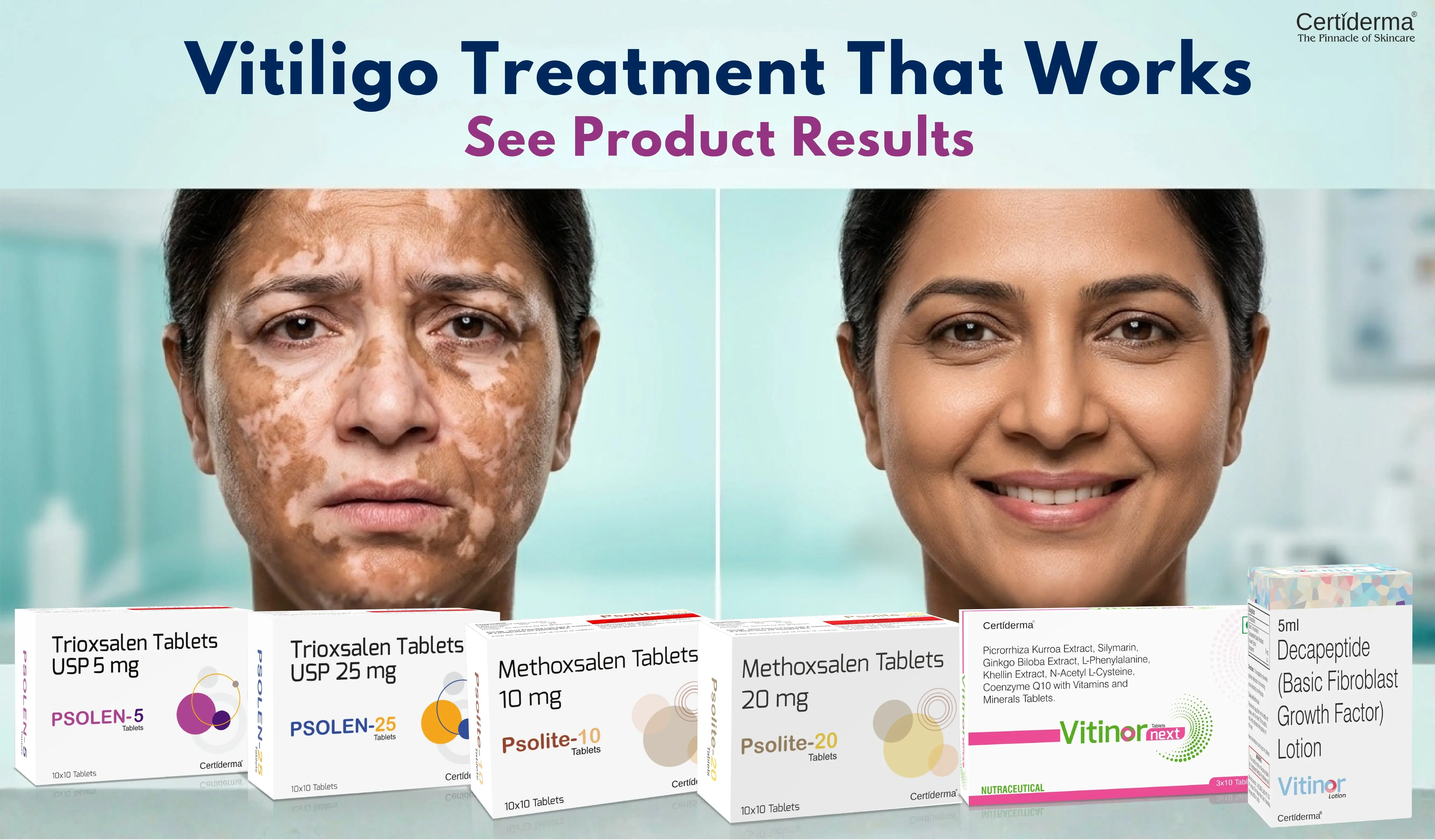
The most effective vitiligo treatment plans typically combine an oral photosensitiser (PSOLEN or PSOLITE) with holistic oral support (VITINOR NEXT) and targeted topical application (VITINOR Lotion) all under clinical supervision. Treating all contributing factors simultaneously produces the most consistent and lasting repigmentation results. |
Why Dermatologists Trust Certiderma for Vitiligo Management
Certiderma's vitiligo portfolio is trusted by dermatologists across India because it is built on four uncompromising principles.
Comprehensive care portfolio
- Oral, topical, and phototherapy-compatible solutions covering every stage of vitiligo treatment from PUVA initiation to long-term nutraceutical maintenance.
Science-backed formulations
- Clinically relevant, research-driven ingredients with transparent composition at every dosage level.
Holistic design
- Addresses both internal triggers (oxidative stress, immune imbalance, micronutrient deficiency) and external symptoms not just surface patches.
Dermatologist-focused
- Seamlessly integrated into professional treatment protocols, with flexible dosing options and clear clinical guidance for every product.
The mind-skin connection is also increasingly recognised in dermatology: emotional stress is a documented trigger for vitiligo onset and progression. Certiderma's holistic approach is designed with this in mind, supporting the whole patient, not just the skin condition.
Are you a healthcare professional or franchise partner? Learn more about Certiderma’s commitment to dermatology excellence and explore how our derma PCD pharma franchise program empowers you to deliver advanced, science-driven vitiligo care in your region.
Frequently Asked Questions About Vitiligo Treatment
1. Can vitiligo be permanently cured?
- There is currently no permanent cure for vitiligo, but effective, consistent treatment can significantly reduce the spread of patches and restore meaningful pigmentation in many patients. Many achieve excellent cosmetic results with early and sustained dermatologist-supervised care combining phototherapy, topical agents, and systemic nutraceutical support.
2. How does PUVA therapy support vitiligo repigmentation?
- PUVA therapy combines a psoralen compound trioxsalen (PSOLEN) or methoxsalen (PSOLITE) with controlled UVA light exposure. The psoralen sensitises the skin to UVA, which then stimulates dormant melanocytes to resume melanin production. Results are gradual and are best achieved through a consistent, supervised treatment schedule. Explore Certiderma's full phototherapy tablet range.
3. What is the difference between trioxsalen and methoxsalen?
- Both are psoralen compounds used in PUVA therapy, but they differ in potency and clinical application. Trioxsalen (PSOLEN) is generally milder and often preferred for initiation or sensitive skin. Methoxsalen (PSOLITE) is more potent and widely used in established phototherapy protocols. Your dermatologist will advise the most appropriate option for your condition and treatment history.
4. Can supplements really help with vitiligo?
- Research supports the role of targeted nutritional supplementation in vitiligo management. Ingredients like Ginkgo Biloba, L-Phenylalanine, and antioxidants such as N-Acetyl L-Cysteine have each been studied for their role in reducing oxidative stress and supporting melanocyte function. VITINOR NEXT combines these evidence-informed ingredients into a single, convenient daily formulation designed for use alongside primary treatments.
5. How long does vitiligo treatment take to show results?
- Treatment timelines vary depending on the extent of vitiligo, the areas affected, patient response, and consistency of therapy. Most patients begin to notice subtle pigmentation changes after 3 to 6 months of consistent treatment. Facial and neck areas typically respond faster than hands, feet, and bony prominences.
6. Can VITINOR Lotion be used alongside phototherapy?
- Yes. VITINOR Lotion is specifically designed to complement both oral supplementation and phototherapy protocols. Applying it directly to depigmented patches alongside an ongoing PUVA regimen can enhance localised melanocyte stimulation and improve the overall repigmentation response.
7. Is Certiderma's vitiligo range suitable for all skin types?
- Certiderma's formulations are designed for use across diverse skin types under dermatologist supervision. As with all phototherapy-related products, individual patient assessment is recommended before initiating any PUVA protocol. Your dermatologist will personalise the protocol based on your skin type, vitiligo extent, and medical history.
Your Partner in Vitiligo Care - Take the Next Step
At Certiderma, we know that vitiligo is more than a skin condition. It is a deeply personal journey, one that touches confidence, identity, and emotional well-being every single day. Our formulations are built on one belief: that every skin tells a story, and with the right care, consistency, and clinical guidance, that story can be one of confidence and resilience.
Whether you are a patient beginning your vitiligo treatment journey or a dermatologist looking for science-backed solutions to integrate into your practice, Certiderma's complete vitiligo care range is built to meet you where you are.
Ready to get started? Connect with the Certiderma team today or explore our derma PCD pharma franchise program to bring advanced vitiligo care solutions to patients in your region.
Disclaimer: All products in the Certiderma vitiligo range are intended for use under the guidance of a qualified dermatologist. This article is for informational purposes only and does not constitute medical advice.